Investment Strategy 2026: Navigating Markets When Everything Is at an All-Time High
1 View, 0 Comments — Aur Ek Uncle Ka Woh Comment Jo Kabhi Aaya Hi Nahi
9 July 2026. Maine apni zindagi ka pehla finance article likha.
Naam tha — "How to Manage Money Wisely: The Ultimate Money Management Guide."
Maine usme pure 1184 words likhe. 6 minute read time. Table of contents. SIP ka magic. 50-30-20 rule. Emergency fund. Memories account. Index ETFs. Sab kuch.
Maine socha — "Ab toh viral ho jayega. Log comment karenge. Share karenge. Main next finance influencer ban jaunga."
Result?
📊 1 View. 📝 0 Comments. 👍 0 Shares.
Woh 1 view bhi mera apna tha — jab maine article publish karke khud check kiya ki sahi se show ho raha hai ya nahi. 😭
Main apne aap se bola — "Bhai, tune itna mehnat se likha. Logon ko manage karna sikha diya. Par kya fayda jab koi padh hi nahi raha?"
Phir ek din mere chacha (jo hamesha gyan dete hain) ne mujhe phone kiya:
"Beta, maine tera article padha. Bahut accha likha hai. Lekin ek baat bata — tune toh bata diya ki paise kaise manage karne hain. Par yeh nahi bataya ki paise aate kahan se hain? Main toh salary aate hi khatam kar deta hoon. Manage karne ko bache hi kahan hai? 😅"
Maine socha — Chacha sahi keh rahe hain!
Maine logon ko SIP, Budget, Emergency Fund sab sikhaya. Lekin maine yeh nahi bataya ki:
- Extra paisa kahan se laayein?
- Side hustle kaise karein?
- Tax kaise bachayein?
- Salary ke alawa aur kya sources ho sakte hain?
- Aur haan — woh 20K wali jacket jo maine kharidi aur sirf 2 baar pehni — usse kya seekha?
Toh aaj main yeh article likh raha hoon — apni real-life stories ke saath.
Kyunki dekhna bhai — Investment ka pehla step investment nahi hai.
Investment ka pehla step hai — extra paisa hona.
Aur extra paisa tabhi aayega jab tum:
✅ Apni income badhaoge
✅ Apne tax ko legally optimize karoge
✅ Apne expenses ko reality check doge
✅ Aur haan — shauk aur zaroorat mein farak karna seekhoge
Yeh Article Kisko Padhni Chahiye?
Agar Tum...Toh Yeh Article Tumhare Liye HaiMahine ke 25 din tak paisa khatam kar dete ho✅ BilkulSirf ek income source hai — job✅ HaanTax bahut de rahe ho, bachana chahte ho✅ YesSide hustle karna chahte ho par shuru nahi kar pa rahe✅ ExactlySochte ho — "Budget toh bana liya, par follow nahi hota"✅ Welcome to the club
Iss Article Mein Kya Milega?
S.No.TopicReal Story1Income Ka Pehla SutraSirf ek income source = risky. Multiple sources = safe.2Side Hustle Ka RaazKaise maine apni hobby ko paise mein badala (aur fail bhi hua)3Tax Bachana Sikho30% tax dena band karo — legally4Expense AuditMera khud ka expense tracker — aur uski embarrassing stories5Shauk vs ZarooratWoh 20K jacket aur 2 baar pehni — usse kya seekha
Real Talk: Yeh Article AI Nahi Likha Hai
Maine yeh article apne real experiences se likha hai:
- Meri first salary (jo 15K thi aur mahine ke 20 din mein khatam ho jaati thi)
- Mera side hustle (jisme maine fail hua, phir seekha, phir kamaaya)
- Mera GST registration (jo maine tab kiya jab mujhe pata chala ki 30% tax de raha hoon)
- Meri 20K wali jacket (jo maine EMI pe kharidi aur sirf 2 baar pehni — yes, true story)
- Aur haan — mere 3 saal ke SIP (jo maine shuru kiye jab mujhe extra paisa aana shuru hua)
Isliye agar kuch relatable lage toh comment karna.
Aur agar kuch galat lage toh bhi comment karna — kyuki main bhi seekh raha hoon.
Ek Baat Aur — Meri Failures
Main koi financial expert nahi hoon. CA nahi hoon. SEBI registered advisor nahi hoon.
Main bas ek aam aadmi hoon — jisne galtiyan ki hain, unse seekha hai, aur ab woh seekh tumhare saath share kar raha hoon.
Agar main kar sakta hoon — toh tum bhi kar sakte ho.
Ab bina time waste kiye — chalo shuru karte hain. 🚀
Disclaimer: Yeh meri personal journey hai. Main CA nahi hoon, SEBI registered advisor nahi hoon. Bas ek aam aadmi hoon jo apni galtiyon se seekh raha hai. Koi bhi financial decision lene se pehle expert se consult karein.
All-Time High? All-Time Tension! 😭
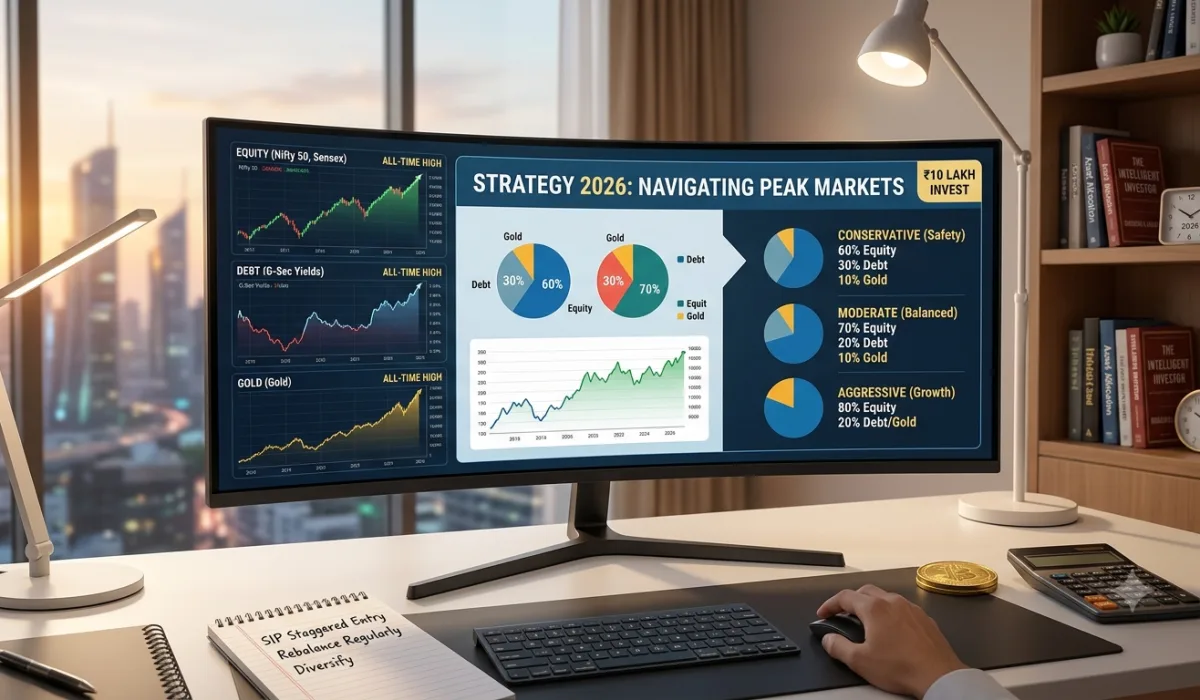
Socho yaar, tumhare paas 10 lakh hai. Invest karna hai. But problem yeh hai — sab kuch already expensive hai.
Equity record pe hai. Debt funds bhi high hain. Gold? Woh bhi all-time high.
Bole toh — "Jab sab kuch mehnga hai, toh paisa invest kaise karein?"
Main jab first time is situation mein aaya, toh mera dimag ghoom gaya tha. Seriously. Mujhe laga — "Ab kya karein? Wait karein? Invest karein? FD mein daal dein?"
Toh maine research ki. Boht saari research. Aur pata chala — answer simple hai.
Risk profile pe depend karta hai.
Matlab — tum kitna loss seh sakte ho bina panic hue?
Pehle Samjho: Tum Kaun Ho?
Experts bolte hain teen types ke log hote hain:
ProfileRisk ToleranceKis Ke Liye?ConservativeLowJo log safety chahte hain, neend nahi khoni chahteModerateMediumJo log thoda risk le sakte hain better returns ke liyeAggressiveHighJo log long-term sochte hain aur volatility se darte nahi
Main toh aggressive hoon. Par sabko aggressive nahi hona chahiye. Mera ek dost hai — usko 5% drop dekh ke neend nahi aati. Woh conservative hai. Aur woh khush hai. Kyunki usko pata hai ki uski portfolio safe hai.
Toh pehle decide karo — tum kaun ho?
Ab Dekhte Hain — Kaunsa Portfolio Tumhare Liye Sahi Hai?
1. Conservative Investors (Safety First)
Allocation: 60% Large-Cap Equity | 30% Debt | 10% Gold
Agar tumhe neend pyari hai aur raat ko uthke portfolio nahi dekhna — toh yeh tumhara zone hai.
Meri Father Ki Story: Jab Unhone Apni Life Savings Shoebox Se Nikali
Yaar, mere papa 40 saal history teacher rahe. Unhone apni poori zindagi bacchon ko exam mein pass kiya, history ke dates yaad karwaye, aur retirement ke baad socha — "Ab aaram karenge."
Par ek problem thi — unka paisa shoebox mein tha.
Shoebox literally nahi tha, but practically haan. Bank account mein tha, but interest rate itna low tha ki insult lagta tha. Seriously, 2-3% interest? Inflation 5-6%? Matlab paisa ghat raha tha.
Maine kaha — "Papa, invest karo."
Unhone kaha — "Beta, yeh sab gambling hai. Main toh teacher hoon, share market nahi samajhta."
Phir maine unko samjhaya — "Papa, aapne 3 wars dekhi hain, 2 financial crises dekhe hain, aur ek global pandemic dekha hai. Agar aap survive kar sakte hain — toh yeh companies bhi survive kar sakti hain."
Unhone trust kiya. (Shayad isliye kyuki main unka beta hoon, warna kisi aur ki baat nahi maante 😂)
Humne Kya Kiya?
60% Large-Cap Equity — Unko pata tha ki yeh companies kya karti hain. Unhone khud bola — "Yeh soap wali company? Main roz use karta hoon. Yeh car wali? Humne 2 baar li hai. Yeh phone wali? Tera bhai usme kaam karta hai."
Maine kaha — "Bas, inme invest karo."
30% Debt Funds — Yeh unka favorite tha. Kyunki isme risk nahi hai. Bolte the — "Beta, isme toh interest aata hai na? Chahe market kuch bhi ho?"
Maine kaha — "Haan papa."
Woh khush ho gaye.
10% Gold ETFs — Unhone kaha — "Main raja nahi hoon ki sona rakhun."
Maine kaha — "Papa, yeh hedge hai. Jab market giregi, toh gold bachayega."
Phir Aaya 2020 Ka Crash
8:00 AM ko phone. Frantic call.
"Beta! Market 10% down! Mera paisa barbaad ho raha hai! Sab bech do! Bank mein daal do!"
Maine kaha — "Papa, ruko. Dekho — Debt stable hai. Gold actually up hai kyunki log panic kar rahe hain. Agar ab equity bechoge toh loss book karoge. Wait karo."
Woh maan gaye. (Shayad isliye kyuki maine unko The Intelligent Investor ka ek chapter sunaya tha 😂)
2021 mein market recover hui. Unka portfolio up tha.
Aaj woh 72 ke hain. Portfolio check nahi karte. Bacchon ko history padhate hain. Neend aati hai unko.
Lesson: Conservative investing matlab dar nahi — matlab smart hona.
2. Moderate Investors (The Balanced Approach)
Allocation: 70% Equity | 20% Debt | 10% Gold
Thoda risk le sakte ho? Thoda neend bhi chahiye? Moderate tumhari zone hai.
Mera Friend — Jo Roz Portfolio Check Karta Tha
Yaar, mera ek dost hai. Bohot accha banda hai. Par ek problem thi — woh din mein 10 baar portfolio check karta tha.
Subah uthke. Lunch ke time. Office mein chupke se. Sone se pehle. Ek time toh toilet mein bhi check kar raha tha. 🚽
Maine kaha — "Bhai, kya kar raha hai?"
Bola — "Market dekh raha hoon."
Maine kaha — "Roz? Toilet mein?"
Bola — "Haan yaar, kya pata kuch mil jaaye."
Phir usne The Intelligent Investor padhi. (Maine hi di thi usko.)
Ab woh quarterly review karta hai. Sirf har 3 mahine mein.
Maine pucha — "Itna chill kaise ho gaya?"
Bola — "Yaar, ab samajh aa gaya. Daily check karne se na market badalti hai, na meri height badhti hai. Bas BP badhta hai." 😂
Uska Formula Simple Hai
70% Equity — Growth ke liye.
20% Debt — Stability ke liye.
10% Gold — Protection ke liye.
Woh balance mein believe karta hai. Na itna risk ki neend udd jaaye, na itna safe ki inflation khaa jaaye.
2025 mein uska portfolio 12% up tha.
Not bad, right?
3. Aggressive Investors (Growth Focused)
Allocation: 80% Equity | 12% Debt | 8% Gold
Agar tum long-term sochte ho aur 20% drop dekh ke bhi panic nahi karte — toh aggressive lo.
Woh Tuesday Jab Main Rone Laga Tha
Yaar, main bata raha hoon — woh din bhool nahi sakta.
Tuesday tha. 10:30 PM.
Main laptop ke saamne baitha tha. Heart pounding. Palms sweaty. (Jaise exam se pehle hota hai.)
Screen pe sea of red. Down 18% in two months.
Mid-caps bleeding. Small-caps freefall mein. Large-caps ne bhi saath chhod diya — jaise dost chhodte hain jab mushkil aati hai. 😭
Mere paas do options the:
- Sab bech do aur bhaag jao.
- Baitho aur trust karo.
Maine option 2 choose kiya.
Kaise Aaya Main Yahan?
3 saal pehle — main typical 20-something tha. Decent salary. Zero financial literacy. Savings account tha jo pocket change deta tha.
Colleagues "multibaggers" aur "SIPs" ki baatein karte the. Mujhe laga yeh koi new coding language hai. 😂
Phir ek din dekha — mere papa, conservative investor, retirement mein struggle kar rahe hain. Inflation ne unki savings khaa li.
Maine decide kiya — "Main young hoon. Risk le sakta hoon. Agar ab nahi lunga toh kab lunga? 60 ke baad? Tab toh main bacchon ko gyan dunga, paisa nahi kamaunga."
The Book That Changed My Life
Maine bahut si books padhi — Peter Lynch, Ray Dalio, Burton Malkiel.
Par ek book sab se alag thi:
📖 "The Intelligent Investor" by Benjamin Graham — with commentary by Jason Zweig.
Maine 4 baar padhi. (Haan, 4 baar. Toilet mein bhi le gaya tha 🚽)
Graham ne ek character introduce kiya — Mr. Market.
Woh ek manic-depressive insaan hai. Roz aata hai. Kabhi khushi mein overprice batata hai. Kabhi depression mein discount deta hai.
Graham ka advice? "Don't follow his mood. Follow your plan."
Mera Aggressive Portfolio
80% Equity
- 40% Large-cap index fund — Foundation. Blue-chip giants.
- 25% Mid-cap fund — Accelerators. Thoda moody, but rewarding.
- 15% Small-cap fund — Game-changers. High risk, high reward.
My rule? Never touch this 80%. No matter what.
20% Debt/Gold
- 12% Debt funds — My "opportunity fund." Jab market gire, toh buy karne ke liye.
- 8% Gold ETFs — Inflation hedge. Portfolio ka umbrella.
My rule? Rebalance every 6 months.
Equity 85% ho gayi? Sell some, move to debt/gold.
Equity 70% ho gayi? Buy more.
Simple. Boring. Effective.
The Crash of 2024
Late 2023 — markets on fire. 🔥 My portfolio up 22% in 10 months.
Friends ne kaha — "100% equity kyun nahi? You're missing out!"
Main disciplined raha.
Then came 2024. Interest rate hikes. Geopolitical tensions. Inflation fears.
Mid-caps crashed. Small-caps crashed. Portfolio down 16%.
Maine socha — "Yaar, CA ban jaata toh aaj yeh haal nahi hota." 😭
But then I opened The Intelligent Investor again. Read the chapter on Mr. Market.
And I realized — "Mr. Market is depressed. He's offering bargains. This isn't time to sell — it's time to buy."
I deployed my 12% debt fund into equities. Bought more mid-caps and small-caps at a discount.
Didn't time the "perfect bottom." Bas systematically buy kiya.
By 2025 — markets recovered. My portfolio skyrocketed. 🚀
That 16% loss? Turned into 25% annualized return over 18 months.
Mera 3 Rules
1. Never Time the Market
Main wait nahi karta "crashes" ke liye. Monthly SIP karta hoon. High mein kam, low mein zyada. Simple. Consistent. Boring. Effective. (Jaise chai — daily routine hai, excitement nahi chahiye ☕)
2. Diversify Relentlessly
Kabhi ek asset class mein 80% se zyada nahi. (Haan, aggressive mein 80% equity hai — but usme bhi large, mid, small ka mix hai)
3. Focus on Asset Allocation, Not Stock Picking
Pehle main hours spend karta tha individual stocks research karne mein. Phir realize hua — "Over 80% of my portfolio's performance comes from my asset allocation — not my stock picks."
I don't chase the "next multibagger." I just stick to my percentages and let compounding do its magic.
Ab Meri Personal Observation (Thoda Sach, Thoda Mazaak)
Conservative walo — tum sabse smart ho. Tumhe pata hai ki "market se zyada tumhari neend import hai." Tumhare liye 60% equity bhi kaafi hai. Aur haan — tumhare father ne sahi kaha tha — "Beta, yeh sab gambling hai." (Unko abhi bhi nahi pata ki Index Fund kya hai, but unka portfolio green hai — soch samajh lo 😂)
Moderate walo — tum balanced ho. Na itna risk ki neend udd jaaye, na itna safe ki inflation khaa jaaye. Mera friend exactly yahi karta hai. Aur uska portfolio? 12% up in 2025.
Aggressive walo — tum pagal ho. Par pyare pagal ho. Tumhe pata hai ki "time in the market beats timing the market" — lekin tab bhi tum har roz portfolio check karte ho. Main bhi yahi karta hoon. Hum sab ek hain. 😂
Mera Personal Mantra
"Market ko time nahi karo — apna plan banao. SIP karo. Diversify karo. Rebalance karo. Aur sabse zaroori — panic mat karo."
Aur haan — The Intelligent Investor padho. Agar nahi padhi toh aaj se shuru karo. Agar padhi hai toh dubara padho. Main toh 4 baar padh chuka hoon — ab mujhe Graham ka Mr. Market dream mein aata hai 😭😂
Wealth Creation Sprint Nahi Hai — Marathon Hai
Sprint — 100m race. 10 second mein khatam. (Short-term trading — jahan log paise banate bhi hain aur gawaate bhi hain. Mostly gawaate hain 😅)
Marathon — 42 km. Dheere dheere, consistently, patiently. (Long-term investing — jahan compounding magic karti hai)
Toh bhai — marathon runner bano, sprinter nahi.
What I've Learned About Myself
Aggressive investing isn't for everyone.
It requires:
- 15+ year time horizon.
- Stomach to watch 20% drop without selling. (Meri girlfriend se zyada patience chahiye 😂)
- Discipline to buy when everyone else is selling.
But if you have those things? The rewards can be life-changing.
Ab Tumhari Baari — Serious Wali
Jab markets peak levels par hain — toh cash hold karne ka temptation bahut hota hai.
Lekin yaad rakho:
"Cash is king — but only in a crisis. In a bull market, cash is a couch potato." 🛋️
The Fun Part 🎉
Comment karo — batao:
- Tum kaunsi profile mein aate ho — Conservative, Moderate, ya Aggressive? (Honest rehna — koi judge nahi karega 😂)
- Tumne The Intelligent Investor padhi hai? Agar haan toh biggest takeaway kya thi? Agar nahi toh kab padhoge? (Aaj se? Kal se? Ya "kal" wala kal kabhi aata nahi? 😅)
- Tumhara current asset allocation kya hai? 60/30/10? 70/20/10? 80/12/8? Ya 90/10 — jahan 90% equity hai aur 10% tension? 😭
- Bonus question — toilet mein portfolio check karte ho? (Be honest — main karta hoon 🚽😂)
Agar Yeh Article Achi Lagi Toh...
- Share karo — apne doston ke saath jo "main kabhi invest nahi kar sakta" sochte hain. Unko batao ki agar main kar sakta hoon, toh woh bhi kar sakte hain.
- Subscribe karo — agar aisi aur articles chahiye. Main likhta rahunga — aap padhte raho, aur comment karte raho 😊
Disclaimer — Zaroori Wala
Disclaimer: Yeh article personal experiences aur educational insights share karne ke liye likha gaya hai. Main SEBI registered advisor nahi hoon. CA nahi hoon. Financial expert nahi hoon. Bas ek aam aadmi hoon — jisne galtiyan ki, unse seekha, aur ab woh seekh tumhare saath share kar raha hoon.
Past performance future returns guarantee nahi karti. Koi bhi investment decision lene se pehle — SEBI-registered financial advisor se consult karein.
Aur haan — toilet mein portfolio check karna band karo. Seriously. BP badhta hai. 🙏
Akhri Baat — Dil Se
Bhaiyo aur behno — paisa kamaana art hai, paisa manage karna science hai, aur paisa grow karna combination hai dono ka.
Maine 3 saal pehle shuru kiya tha — zero knowledge, zero confidence, zero portfolio. Aaj? Knowledge hai, confidence hai, portfolio hai.
Agar main kar sakta hoon — toh tum bilkul kar sakte ho.
Bas shuru karo. Consistent raho. Aur panic mat karo.
Chalo — ab comment karo! 👇
Main wait kar raha hoon tumhara reply — aur haan, agar koi funny comment aaya toh main uska reply zaroor doonga! 😊
— Aapka apna,
Ek Aam Aadmi Jo Finance Seekh Raha Hai
P.S. — Ek Baat Aur
Yaar, main yeh article likh raha tha, tabhi mere chacha ka phone aaya. (Haan, wohi chacha jinhone pehle comment kiya tha ki "extra paisa kahan se laayein")
Bole — "Beta, tera article padha. Accha hai. Par ek baat bata — tu toh bol raha hai aggressive investor hai. Toh teri girlfriend ko pata hai ki tu kitna invest karta hai?"
Maine kaha — "Chacha, woh toh mujhe nahi pata. Aur woh bhi nahi jaanti."
Chacha bole — "Beta, sabse zaroori investment — apni life mein transparency."
Haan Chacha, aap sahi keh rahe hain.
Par abhi toh portfolio banao, phir girlfriend ko batao. 😂
Ab sahi mein comment karo! 👇
Financial Expert
Personal Finance & Govt Schemes Specialist